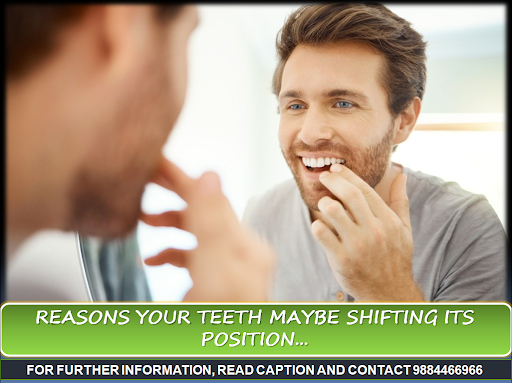
Aging: As you age, your teeth may naturally shift due to changes in your jawbone and the surround…
Aging: As you age, your teeth may naturally shift due to changes in your jawbone and the surrounding structures. The bone density in your jaw decreases over time, leading to a gradual movement of teeth. Tooth Loss: Losing a tooth creates a gap in your mouth, which can cause the surrounding teeth to shift into the empty space. This movement can lead to misalignment and bite issues, which not only affect the appearance of your smile but also your ability to chew & speak properly. Gum Disease: Gum disease can weaken the structures that support your teeth, leading to loosening & shifting. As the disease progresses, it can damage the bone and tissue that hold your teeth in place, causing them to move out of alignment. This shifting can be gradual, but over time, it can lead to noticeable changes in the way your teeth fit together. Teeth Grinding (Bruxism): Grinding your teeth, especially at night, can put excessive pressure on your teeth and cause them to shift over time. Bruxism can also lead to tooth wear, fractures & other dental issues that contribute to misalignment.
Visit us @AppleDental for more details!