Although root canals and dental crowns are two different procedures, they share the same goal. To…
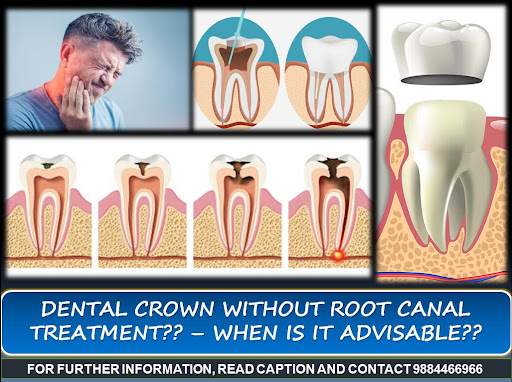
Although root canals and dental crowns are two different procedures, they share the same goal. To protect and save the tooth for as long as possible. Root canal treatment involves treating the inside of the tooth when the pulp is irreversibly damaged. A crown, on the other hand, restores the visible part of the tooth. You may think that placing a crown would automatically require a root canal as the two often go together. However, this is not always the case.
A dental crown, a cap for damaged teeth, can be placed without a root canal if the tooth's damage is superficial, compromising only the enamel and the outer parts of the dentin. Root canals are needed when a tooth’s nerve and pulp are inflamed, infected, or dead, often due to deep cavities or injury. While crowns can be used independently of root canals for less severe tooth damage, a crown is usually necessary after a root canal to strengthen the weakened tooth. The necessity of either a crown or a root canal depends on the specific condition and extent of damage to the tooth. Dental treatment decisions, such as whether to opt for a crown, root canal, or both, should be made after consulting with a dentist who will evaluate the tooth’s condition.
The simple “rule of thumb” says this: if the nerve of the tooth is involved/affected, a root canal will be needed. If the nerve is healthy and intact, the tooth shouldn’t need a root canal.
Dr. Deepak Kamalanathan, one of the ...