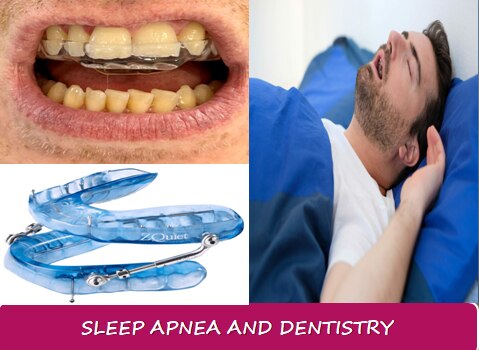
Sleep apnea is a very common sleep disorder affecting 25 million adults. It is characterized by r…
Sleep apnea is a very common sleep disorder affecting 25 million adults. It is characterized by repeated breathing interruptions (apneas) during sleep cycles. Apneas are caused by tissue collapses of the airway related to weak airway muscles, a large tongue, being overweight, or other risk factors. Apneas prevent oxygen from reaching the lungs.
Common symptoms of sleep apnea include: Reduced and absent breathing Frequent and loud snoring Gasping for air during sleep Daytime sleepiness and fatigue Decreases in attention and concentration Forgetfulness Dry mouth and headaches upon waking Nocturia (waking up often during the night to urinate) Sexual dysfunction and/or decreased libido
ASSOCIATION WITH DENTAL:
Good, quality sleep keeps you healthy and reduces bad breath, mouth ulcers, and development and progression of periodontal disease (gum disease). Dental problems associated with sleep apnea include TMJ disorders, bruxism, and mouth breathing.
Some symptoms of sleep apnea are specific to dental problems. Dental symptoms to look out for in both adults and children include:
clenching and grinding teeth during sleep, sometimes loud enough to wake you or your partner up tightness and pain in jaw joints sore and raw spots from chewing the inside of one or both cheeks dull headaches that start at the temples
Be sure to discuss the above symptoms with your dentist. He or she may suggest ways to alleviate them. TREATMENT :
MA...