Alcohol consumption increases the acidity in the mouth, causing wear on the outermost layer of te…
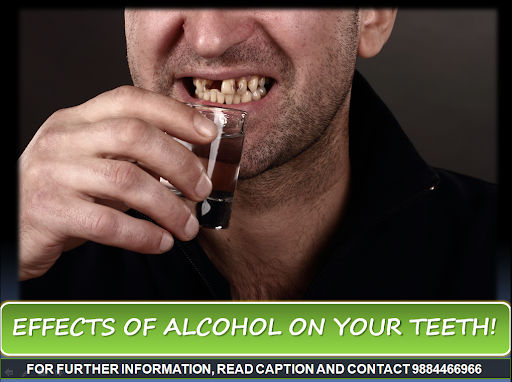
Alcohol consumption increases the acidity in the mouth, causing wear on the outermost layer of teeth, the enamel. This is known as dental erosion and teeth with this type of erosion have areas that look darker and worn, which makes them more sensitive to changes in temperature and prone to developing cavities. Drinks with a high alcohol content decrease the flow of saliva, causing dry mouth. Saliva is essential to protect teeth, aid digestion, and remove plaque and bacteria from tooth surfaces. Decreased saliva flow predisposes the person to the development of cavities, periodontal disease, and bad breath.
Excessive alcohol consumption damages the genetic material of the cells of the mucosa and the tongue, increasing the risk of developing oral cancer. Additionally, if alcohol is combined with tobacco, the risk is much higher. In a nutshell, alcohol can deteriorate teeth and oral tissues and hence it is advisable to limit its consumption to reduce its negative implications for dental and general health. After all, excessive alcohol consumption is considered a public health problem!!!